
MARVELL 88RF808-GAN2: A Comprehensive Analysis of its Architecture and Performance in 5G RF Applications
The relentless global deployment of 5G networks demands radio frequency (RF) components that deliver unprecedented levels of efficiency, linearity, and integration. At the heart of many advanced 5G infrastructure solutions, particularly in massive MIMO (Multiple Input Multiple Output) active antenna systems (AAS) and small cell transceivers, lies the power amplifier (PA). The Marvell 88RF808-GAN2 emerges as a pivotal component in this landscape, a highly integrated front-end module (FEM) engineered to meet these stringent requirements. This article provides a comprehensive analysis of its innovative architecture and its consequential performance in modern 5G applications.
Architectural Innovation: Integration and Gallium Nitride Prowess
The architecture of the 88RF808-GAN2 is a testament to Marvell's focus on system-level integration and performance optimization. It is not merely a discrete power amplifier but a complete fully integrated 4-channel RF front-end module. Each channel incorporates a key sequence of components: a low-noise amplifier (LNA) for the receive path, a high-performance PA for the transmit path, and a complementary pair of transmit/receive switches.
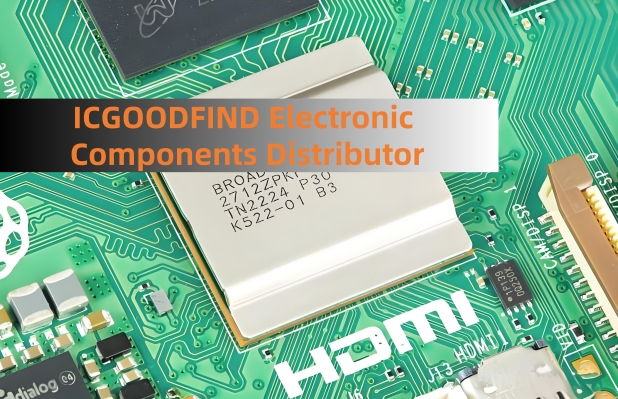
The most critical architectural feature is the use of Gallium Nitride (GaN) technology for the power amplifier cores. GaN-on-SiC (Silicon Carbide) semiconductors offer significant advantages over traditional Gallium Arsenide (GaAs) or Silicon (Si) LDMOS technologies, including higher power density, wider bandwidth capabilities, and superior thermal conductivity. This allows the 88RF808-GAN2 to operate efficiently at higher frequencies and power levels while maintaining a relatively compact form factor. The integration of LNAs and switches on a single die reduces the external component count, simplifies PCB design, minimizes insertion losses, and ultimately lowers the total system cost and footprint—a crucial factor for dense antenna arrays.
Performance Analysis in 5G Bands
The performance of the 88RF808-GAN2 is tailored for the spectrum bands that are foundational to 5G, specifically the 3.3 GHz to 3.8 GHz frequency range allocated for 5G NR (New Radio) in numerous countries.
High Efficiency and Output Power: The module delivers exceptional output power, typically +39 dBm per channel under 5G NR waveforms. This high power is achieved with remarkable efficiency, a direct benefit of the GaN technology. High efficiency translates to reduced power consumption and thermal dissipation, which is paramount for reducing the operational expenditure (OPEX) of 5G base stations and easing thermal management design challenges.
Superior Linearizability: 5G modulation schemes like 256-QAM and OFDMA have high Peak-to-Average Power Ratios (PAPR), demanding extreme linearity from PAs to avoid spectral regrowth and adjacent channel interference. The 88RF808-GAN2 exhibits excellent linearity characteristics. It is designed for easy digital pre-distortion (DPD) correction, enabling system designers to further optimize linearity and efficiency across the entire operating bandwidth, ensuring compliance with strict 3GPP spectral mask requirements.
Receiver Path Performance: The integrated LNA boasts a low noise figure, which is critical for maintaining the overall system sensitivity and uplink performance in both FDD and TDD operation modes. This ensures strong signal reception, improving the coverage and quality of the 5G network.
Application in 5G Infrastructure
The combination of its multi-channel architecture and high performance makes the 88RF808-GAN2 ideally suited for massive MIMO antenna systems and active antenna units (AAUs). In these systems, dozens of these FEMs can be deployed to form a large array of transceivers, enabling advanced beamforming and spatial multiplexing techniques that are essential for boosting network capacity and spectral efficiency in 5G. Its performance also makes it a strong candidate for 5G small cells and picocells, where similar performance is required in a smaller, more power-constrained package.
The Marvell 88RF808-GAN2 represents a significant leap in RF front-end design, successfully addressing the core challenges of 5G infrastructure. Its highly integrated multi-channel architecture, leveraging the inherent advantages of GaN technology, provides a powerful, efficient, and linear solution that simplifies design and accelerates the deployment of high-performance 5G networks. It stands as a key enabler for the dense, efficient, and high-capacity radio systems that define the next generation of wireless communication.
Keywords: 5G RF Front-End, Gallium Nitride (GaN) PA, Massive MIMO, Power Amplifier Efficiency, Integrated FEM
